Finding a grant that looks suitable is one thing. Deciding whether it is genuinely worth applying for is something else entirely.
For small charities in particular, this matters. Time spent on a grant application is time that cannot be spent delivering services, supporting beneficiaries or doing all the other things that somehow end up on the charity to-do list.
So before you start writing, it is worth asking a simpler question:
Is this actually a good fit for us?
A grant does not need to be perfect. But the better the fit, the better your chances of producing a strong application without wasting hours trying to force your project into the wrong funding opportunity.
Start with the hard eligibility rules
This is the quickest place to begin.
Check things such as:
- the type of organisation the funder will support
- geographical restrictions
- minimum or maximum income requirements
- the type of activity they will fund
- the amount you can apply for
- whether they fund core costs, projects, capital expenditure or a mixture
- any exclusions
If your charity fails one of the funder's firm eligibility criteria, stop there.
It can be tempting to think, we are almost eligible, or perhaps they will make an exception. Unless the funder explicitly says there is flexibility, that is usually time better spent elsewhere.
Look beyond eligibility
Being eligible does not necessarily mean you are a strong candidate.
A funder may technically support charities working with young people, for example, but their recent awards might show a particular interest in mental health, employability or disadvantaged communities.
Look at the language the funder uses.
What outcomes are important to them? What sort of organisations have they funded previously? Does your proposed work naturally fit their priorities?
The key word here is naturally.
If you find yourself rewriting the description of your project simply to make it sound like something the funder wants, that can be a warning sign.
Is the amount sensible?
A £50,000 funding programme might sound exciting, but that does not automatically make it right for your charity.
Consider what you genuinely need and what you can realistically deliver.
Equally, think about whether a small grant is worth the work involved. A £500 grant with a two-page application might be very attractive. A £500 grant requiring detailed budgets, policies, supporting documents and several hours of work may be less so.
The question is not simply:
How much could we get?
It is:
Is the possible reward proportionate to the time and effort required?
Check the timetable
Deadlines can create unnecessary pressure.
Before committing to an application, check whether you have enough time to prepare it properly and whether the funding timetable works for your project.
Some funders make decisions quickly. Others may take several months.
If your project needs to begin next month and the funder will not make a decision for six months, it is probably not the opportunity you need right now.
Think about what the application will require
Some grant applications are refreshingly simple. Others want detailed budgets, monitoring plans, safeguarding policies, accounts, trustee information, impact data and supporting documents.
None of that necessarily makes the grant unsuitable.
But you should know what you are getting into before starting.
If a particular opportunity requires information your charity does not currently have, ask whether you can realistically produce it before the deadline.
Consider your chances, not just the prize
Nobody can guarantee that a grant application will succeed.
But you can improve the odds by concentrating on opportunities where there is a genuine match between your charity, your project and the funder's priorities.
Ten vaguely suitable applications are not necessarily better than three carefully chosen ones.
In fact, applying for fewer grants can sometimes lead to better results because you have more time to make each application specific, relevant and convincing.
*A simple final check
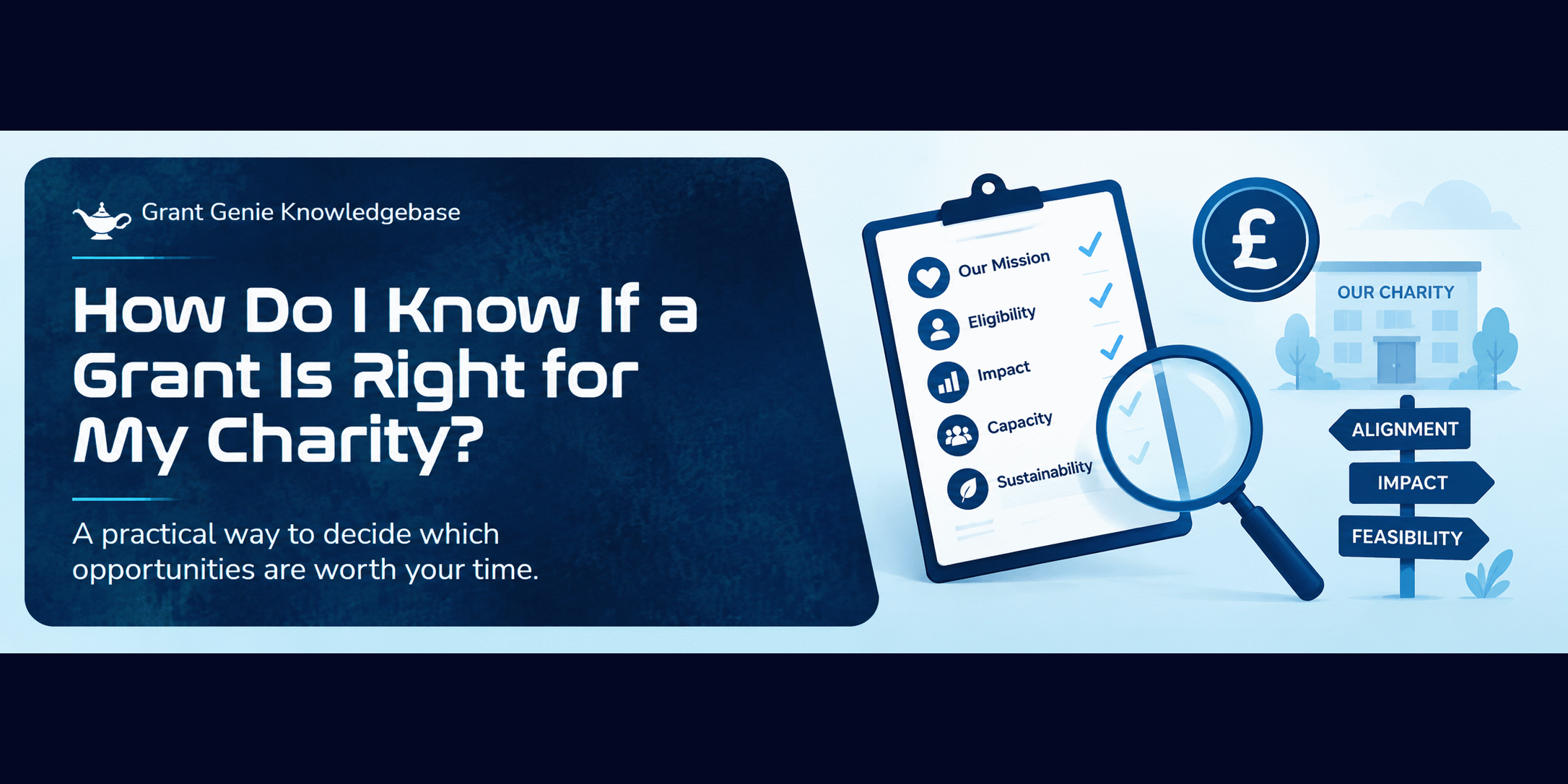
Before deciding to apply, ask yourself:
- Are we eligible?
- Does our work genuinely fit what this funder wants to achieve?
- Is the amount appropriate?
- Can we meet the deadline and application requirements?
- Is this opportunity worth the time it will take?
If you can answer yes to all five, you probably have an opportunity worth investigating further.
If several answers are maybe, it may be worth looking for a better match.
Finding the right grants is part of the job
Successful grant fundraising is not just about writing good applications.
It starts earlier, with choosing the right opportunities.
The aim is not to apply for every grant your charity couldapply for. It is to identify the grants where your organisation has a credible reason to be funded and then give those applications the attention they deserve.
That is also why good grant searching matters.
The less time you spend wading through unsuitable opportunities, the more time you have to concentrate on the grants that could genuinely make a difference to your charity